
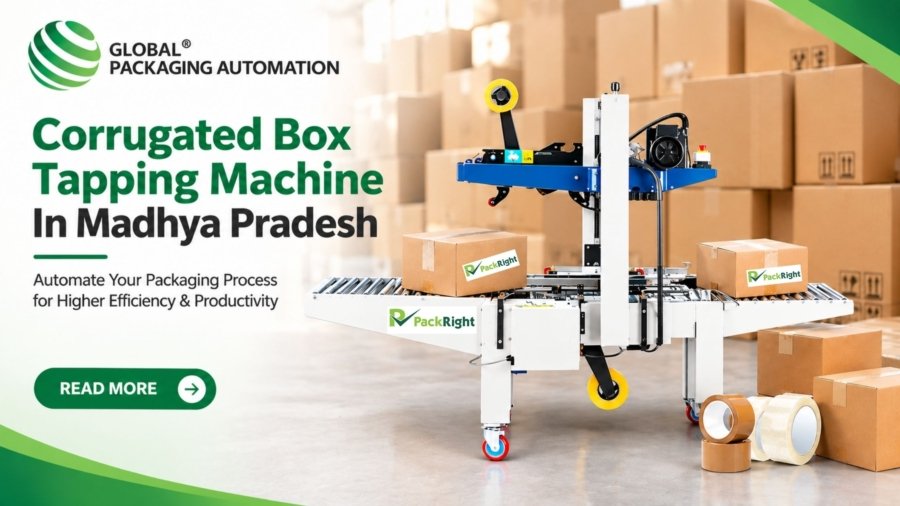
In today’s fast-moving supply chain, end-of-line efficiency is just as critical as production speed. An industrial Corrugated Box Tapping Machine bridges the gap between production and distribution, ensuring every cardboard carton is securely taped and ready for shipment. From uniform automatic sealers to fully adjustable random carton sealers, these machines eliminate tape waste, reduce repetitive strain injuries, and accelerate order fulfillment. Discover how implementing an automated box sealing system can streamline your packaging operations today.
What Is a Corrugated Box Tapping Machine?
A Corrugated Box Tapping Machine is an automated or semi-automated packaging machine designed to seal corrugated cartons using adhesive tape. The machine helps streamline the box-sealing process by automatically positioning the carton, folding the flaps, applying adhesive tape, and cutting the tape to the required length, depending on the machine configuration.
Unlike manual taping, where an operator needs to fold the carton flaps and apply tape by hand, an automatic box tapping machine performs these repetitive operations with greater speed and consistency. It can be used as a standalone machine or integrated with other packaging equipment to create a complete end-of-line packaging system.
How Does a Corrugated Carton Box Tapping Machines Work?
A Corrugated Box Tapping Machine works by automating the carton-sealing process, from feeding and aligning the box to folding the flaps, applying adhesive tape, and discharging the sealed carton. The machine uses a combination of conveyors, belts, guides, flap-folding mechanisms, and a tape head to ensure that every carton is sealed efficiently and consistently.
Depending on the machine configuration, some models may require the operator to place the carton on the conveyor, while fully automatic systems can be integrated with upstream equipment for continuous carton feeding.
Here is a step-by-step explanation of how a typical corrugated box tapping machine works:
- Box Feeding: The packaging process begins when the corrugated box enters the machine through the conveyor system. In a semi-automatic machine, the operator typically places the carton on the conveyor, while in a fully automatic packaging line, cartons can be transferred automatically from the previous machine or conveyor.
The conveyor moves the carton at a controlled speed toward the sealing section. Proper and continuous box feeding helps maintain a smooth packaging workflow and prevents unnecessary interruptions in the production process.
The machine can be configured according to the size, weight, and production requirements of the cartons being handled.
- Box Alignment: Once the carton enters the machine, it needs to remain properly positioned throughout the sealing process. Side belts, guide rails, rollers, or adjustable guiding mechanisms help maintain the carton in the correct position.
Proper alignment is important because it ensures that the carton passes through the flap-folding and tape-sealing sections accurately. Correct positioning also helps prevent problems such as uneven tape application, carton movement, or improper sealing.
The guides and belts can generally be adjusted according to the carton dimensions, allowing the machine to accommodate the required range of box sizes.
- Flap Folding: After the carton is correctly aligned, the machine prepares the top flaps for sealing. Depending on the machine design, the flaps are folded into the required position using mechanical flap-folding components.
The purpose of this stage is to bring the carton flaps together along the centre seam so that adhesive tape can be applied effectively.
Proper flap positioning is essential for achieving a neat and secure seal. The flap-folding mechanism is designed to maintain a consistent carton shape as it moves toward the tape application section.
- Tape Application: Once the carton flaps are positioned correctly, the machine automatically applies adhesive tape along the carton seam. The tape is supplied from a tape roll mounted on the machine’s tape head.
As the carton moves through the sealing section, the tape head applies pressure-sensitive adhesive tape to the top seam of the box. The tape adheres to the carton surface and holds the flaps securely together.
Depending on the machine configuration, the tape head can be adjusted to accommodate the required tape specifications. Consistent tape application helps create a uniform and professional carton seal while reducing variations associated with manual taping.
- Tape Cutting: After the adhesive tape has been applied to the required length, the tape head automatically cuts the tape.
The cutting mechanism is synchronized with the movement of the carton so that the tape is separated at the appropriate point. This eliminates the need for an operator to manually cut the tape after sealing each carton.
Automatic tape cutting helps maintain consistent sealing and contributes to faster carton processing, particularly in medium- and high-volume packaging operations.
- Sealed Box Discharge: After the tape has been applied and cut, the completely sealed carton continues through the conveyor and exits the machine.
The sealed box can then move to the next stage of the packaging process, depending on the production line configuration. This may include:
- Coding and marking
- Labelling
- Checkweighing
- Carton inspection
- Strapping
- Stretch wrapping
- Palletizing
- Warehousing or dispatch
In an automated packaging line, conveyors can transfer the sealed cartons directly to the next machine without requiring manual handling.
Types of Corrugated Box Sealing Machines
Corrugated box tapping machines are available in different configurations to meet the packaging requirements of businesses ranging from small-scale operations to high-volume manufacturing facilities. The right machine depends on factors such as carton size, production volume, labour availability, level of automation, and whether the cartons are of a fixed or variable size.
Based on the level of automation and carton-handling requirements, corrugated box tapping machines can generally be classified into manual, semi-automatic, fully automatic, uniform-carton, and random-carton sealing systems.
- Semi-Automatic Box Taping Machine: A Semi-Automatic Box Taping Machine automates the carton-sealing operation while still requiring an operator to place and prepare the carton. Once the box is positioned on the conveyor, the machine transports it through the sealing section and automatically applies adhesive tape.
The operator generally folds or prepares the carton flaps and places the box into the machine. The machine then performs the taping operation without requiring the operator to manually apply and cut the tape.
- Fully Automatic Box Taping Machine: A Fully Automatic Box Taping Machine is designed for businesses that require continuous and high-speed carton sealing with minimal operator intervention. It can be integrated with upstream and downstream packaging equipment to create a complete automated end-of-line packaging system.
Depending on the machine configuration, the system can automatically handle carton feeding, alignment, flap folding, tape application, tape cutting, and carton discharge.
- Automatic Carton Feeding: In a fully automatic packaging line, cartons can be transferred to the tapping machine automatically through conveyors or from an upstream machine such as a carton erector or filling station.
This eliminates the need for an operator to manually place every carton into the sealing machine. Continuous carton feeding helps maintain a smooth workflow and supports higher production volumes.
- Automatic Flap Folding and Sealing: After entering the machine, the carton is guided into the correct position. The machine can automatically fold the carton flaps and prepare the top seam for sealing.
The adhesive tape is then applied automatically by the tape head as the carton passes through the machine. After the required sealing length is achieved, the tape is cut automatically.
This complete automated process provides uniform sealing and reduces operator involvement.
- Uniform & Random Carton Sealing Machines: Another important classification of corrugated box tapping machines is based on whether the machine handles uniform-size cartons or variable-size cartons.
The choice between a uniform-carton sealing machine and a random-carton sealing machine depends largely on the type of products being packaged and the variation in carton dimensions.
- Uniform-Size Carton Sealing Machine: A uniform carton sealing machine is designed to handle cartons with similar or standardized dimensions. The machine is generally adjusted according to a specific range of carton sizes and can efficiently process cartons with consistent dimensions.
Because the carton dimensions remain relatively stable, the machine can maintain a consistent setup throughout production.
- Random Carton Sealing Machine: A random carton sealing machine is designed to handle cartons with different dimensions without requiring manual adjustment for every box. The machine can automatically adapt to variations in carton height, width, or length within its specified operating range.
This makes random carton sealing systems particularly useful for operations where multiple product sizes are packed using different carton dimensions.
Benefits of Corrugated Box Tapping Machine
A Corrugated Box Tapping Machine can significantly improve the efficiency, consistency, and reliability of carton-sealing operations. For businesses handling a large number of corrugated boxes every day, automating the taping process can reduce repetitive manual work while maintaining a consistent sealing standard.
From increasing packaging speed to reducing tape wastage and improving the overall appearance of finished cartons, a box tapping machine offers several benefits for modern packaging operations.
- Increased Packaging Speed: One of the major advantages of a Corrugated Box Tapping Machine is its ability to seal cartons faster than conventional manual taping methods. The machine automatically transports the carton, applies adhesive tape, and cuts the tape according to the required sealing process.
This allows businesses to process more cartons within a given period and maintain a continuous packaging workflow. Higher sealing speed can be particularly beneficial for manufacturing units, warehouses, e-commerce fulfilment centres, and logistics operations where large numbers of cartons need to be packed every day.
By reducing the time required to seal each carton, businesses can improve overall packaging capacity without adding the same level of manual effort.
- Consistent Sealing Quality: Manual carton sealing can sometimes result in variations in tape position, tape length, or sealing pressure because the process depends on individual operator handling.
A box tapping machine performs the sealing operation according to predefined machine settings. The tape head applies adhesive tape consistently along the carton seam, helping produce a uniform seal across multiple cartons.
Consistent sealing not only helps improve carton security during transportation and handling but also creates a standardized packaging process throughout the production run.
- Reduced Labour Dependency: Manual taping requires operators to repeatedly fold carton flaps, apply tape, cut the tape, and move the sealed boxes. When hundreds or thousands of cartons are processed daily, these repetitive activities can require considerable labour involvement.
A Corrugated Box Tapping Machine automates much of this repetitive work. Depending on the level of automation, the operator may only need to feed the carton into the machine or monitor the packaging process.
This reduces dependency on repetitive manual taping operations and allows employees to focus on other important tasks within the packaging or production area.
- Improved Productivity: Automating carton sealing can contribute to improved productivity across the entire packaging line. Faster carton processing, consistent sealing, and reduced manual intervention allow the packaging operation to maintain a more continuous workflow.
A tapping machine can also be integrated with other end-of-line equipment such as carton erectors, conveyors, coding systems, checkweighers, strapping machines, stretch wrapping machines, and palletizing systems.
When multiple machines work together, businesses can create a streamlined packaging process with fewer manual handling points and improved overall operational efficiency.
- Reduced Tape Wastage: In manual taping operations, the amount of tape used can vary from one carton to another. Excess tape, uneven application, or improper cutting may result in unnecessary material consumption.
A box tapping machine applies and cuts the tape through a controlled mechanical process. This helps maintain a consistent tape length and application pattern according to the carton and machine settings.
Better control over tape application can help businesses minimize unnecessary tape usage and improve consumable management, especially when large volumes of cartons are processed regularly.
- Better Workplace Efficiency: Carton sealing can involve repetitive movements when performed manually, particularly in high-volume packaging environments. Operators may need to continuously fold flaps, handle tape dispensers, cut tape, and move cartons.
Automating the sealing operation reduces these repetitive manual activities and creates a more organized packaging workflow. Operators can instead monitor the machine, manage carton flow, perform quality checks, or handle other production responsibilities.
This can contribute to better utilization of manpower and a more efficient packaging environment.
- Professional Packaging Appearance: Uniform carton sealing can improve the overall appearance of finished packages. A machine applies the adhesive tape in a consistent position and helps maintain a neat and standardized seal.
Professionally sealed cartons are particularly important for businesses involved in e-commerce, retail, FMCG, electronics, pharmaceuticals, and other industries where packaging quality can influence the customer’s perception of the product.
Conclusion
A Corrugated Box Tapping Machine is an efficient packaging solution designed to improve carton sealing speed, consistency, and overall productivity. By automating the box-taping process, it reduces manual effort, minimizes tape wastage, and ensures clean, secure, and uniform sealing of corrugated cartons. It is an ideal packaging solution for industries such as e-commerce, food and beverage, pharmaceuticals, electronics, automotive, and logistics. By investing in a reliable carton tapping machine, businesses can streamline their packaging operations, increase productivity, reduce operational costs, and achieve a professional packaging finish. Watch our latest machine demonstrations on our YouTube channel, Global Packaging Automation LLP.
Looking for a reliable Corrugated Box Tapping Machine for your packaging line? Contact Global Packaging Automation today to find the right automated carton sealing solution for your business.